OCR and translation for archive collections
Catalogues, historical documents and foreign-language archives can combine image-quality, layout and language challenges. Evaluate a few representative pages before extending the workflow.
This page describes uses of existing Geyi tools. The material owner remains responsible for processing rights, sensitive content and final review.
Start by checking a sample
- Choose authorized samples of text, tables and complex layouts, or explore our fixed samples without signing in.
- Extract text and compare missing characters and reading order with the source.
- Choose preserved-layout or reflow translation; check names, places and terminology.
- Keep outputs associated with their originals and obtain the material owner’s review before use.
Before processing your material
Scan quality, historical characters, handwriting and complex layouts can affect results. Evaluate representative pages; OCR does not replace archival review.
Register or sign in to process your own material. Current tools and your account show limits and pricing. Use the contact page to discuss material types; this page makes no commitment to private deployment, institutional pricing or bespoke delivery.
See it in action
Four scanned pages of vertical Japanese from the 1917 first edition of Rashōmon (old-style kanji, historical kana, furigana) become horizontal Simplified Chinese through File Translation at high precision in reflow mode: the right-to-left reading order is kept, furigana stays out of the text, period terms such as Suzaku Avenue, ichime-gasa and momi-eboshi are kept, and all the body text on the 4 pages is translated.
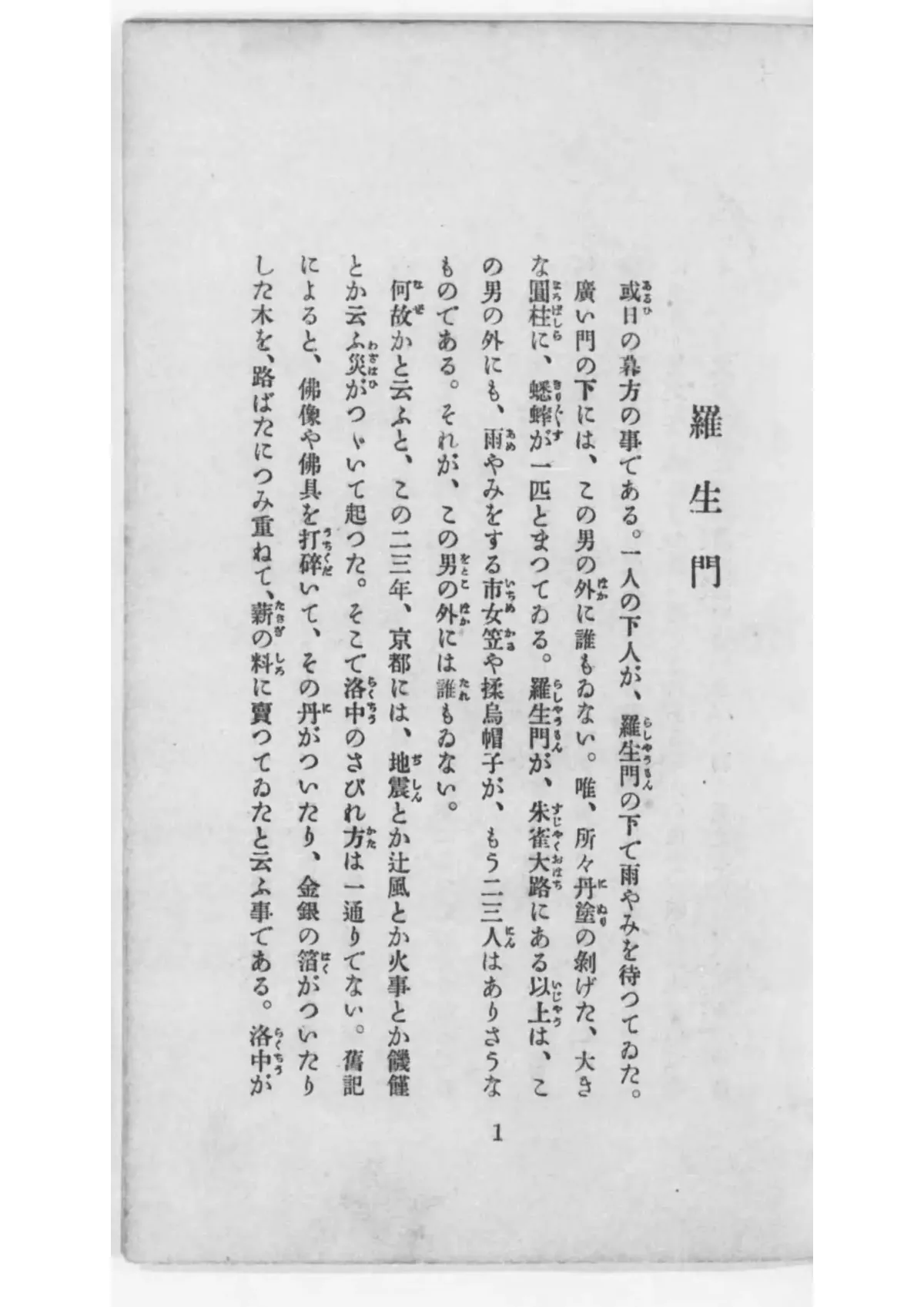
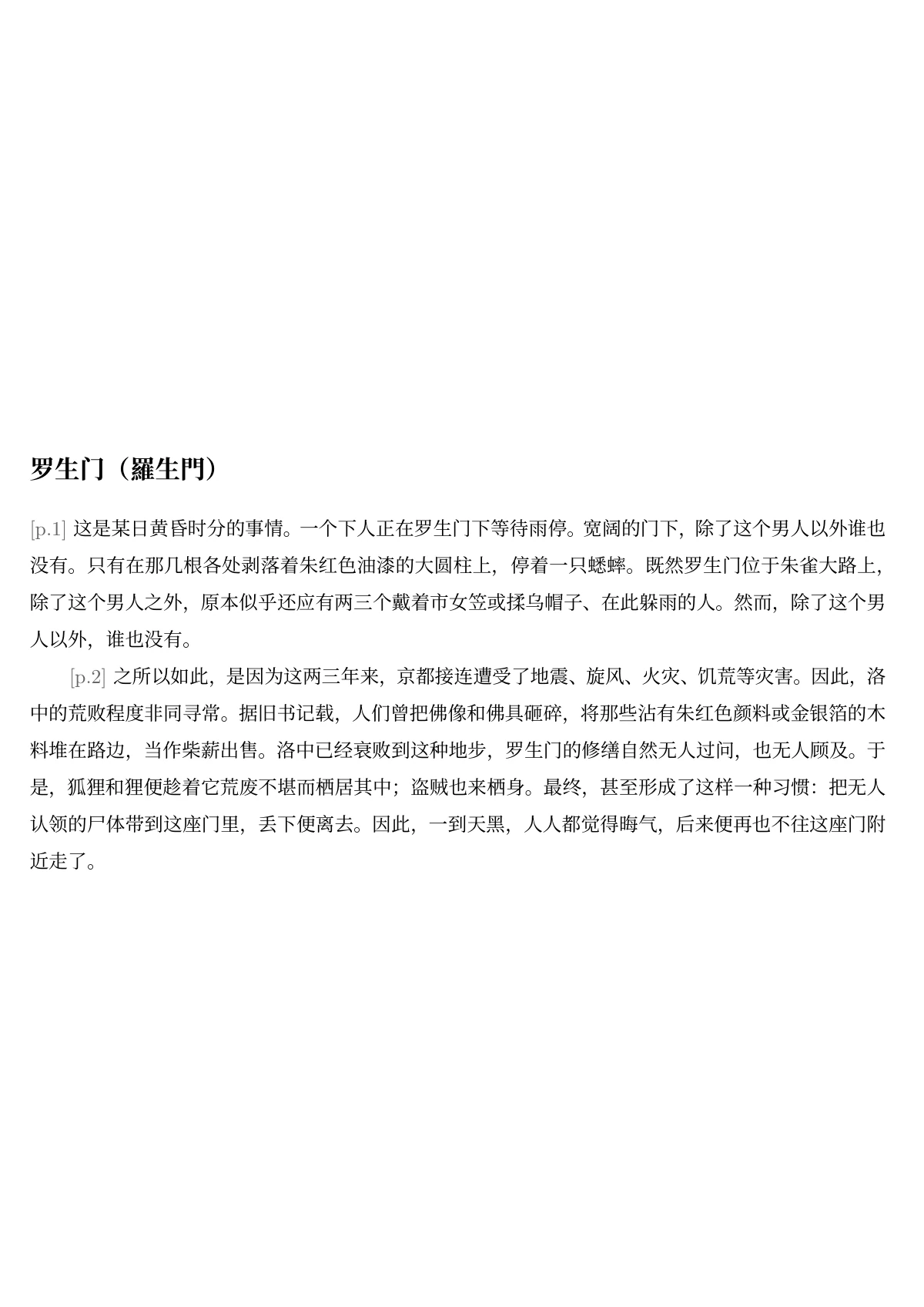
Actual production output; 3 spots hand-corrected before display · Source: Rashōmon, Ryūnosuke Akutagawa, 1917 (The author, Ryūnosuke Akutagawa, died in 1927, more than 70 years ago; under Japanese copyright law, works of authors who died before the end of 1967 were protected for 50 years after death, so protection of this book expired at the end of 1977. The National Diet Library Digital Collections marks the item PDM (Public Domain Mark) and publishes it online (DOI 10.11501/1088339).)
Frequently asked questions
Can vertical Japanese books be processed?
Evaluate samples with the existing translation and extraction tools, checking reading order, missing characters and names against the source.
Can institutional records be uploaded directly?
First confirm processing rights and sensitivity, and read the current privacy and security information. This scenario page is not a certification of compliance.
Are institutional plans or private deployments included?
This page explains existing tools. It makes no commitment to procurement, institutional prices or private deployments; use the contact page for enquiries.
Related
- Explore a sample before using your own document
- Document extraction
- AI document translation
- File format conversion
- Choosing a layout mode and precision tier
- Contact Geyi
- Security and privacy
- Geyi Privacy Policy
Geyi is a proprietary AI document platform owned and operated by Nayuta Technology and Culture Company Limited.